
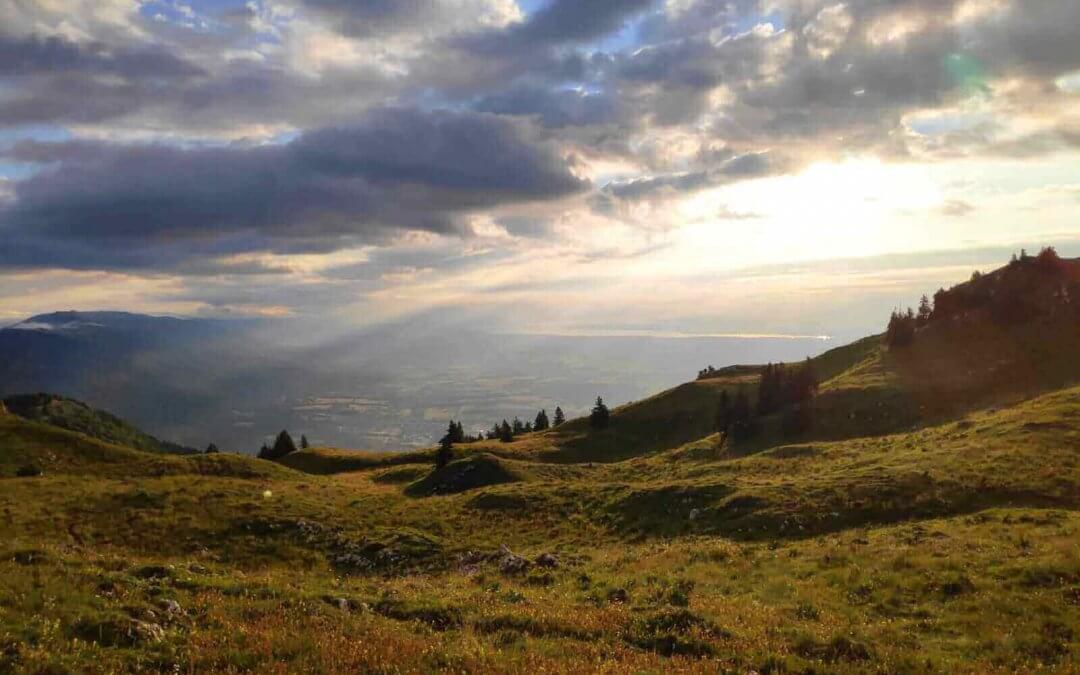
Spending a night up there at dusk, when the Jura ridges turn orange and Lake Geneva lights up below, is the kind of experience that turns a hike into a memory. Bivouacking in the Pays de Gex is a wonderful thing, as long as you do it cleanly and with respect for protected country. Here is the guide to getting it right without a misstep.
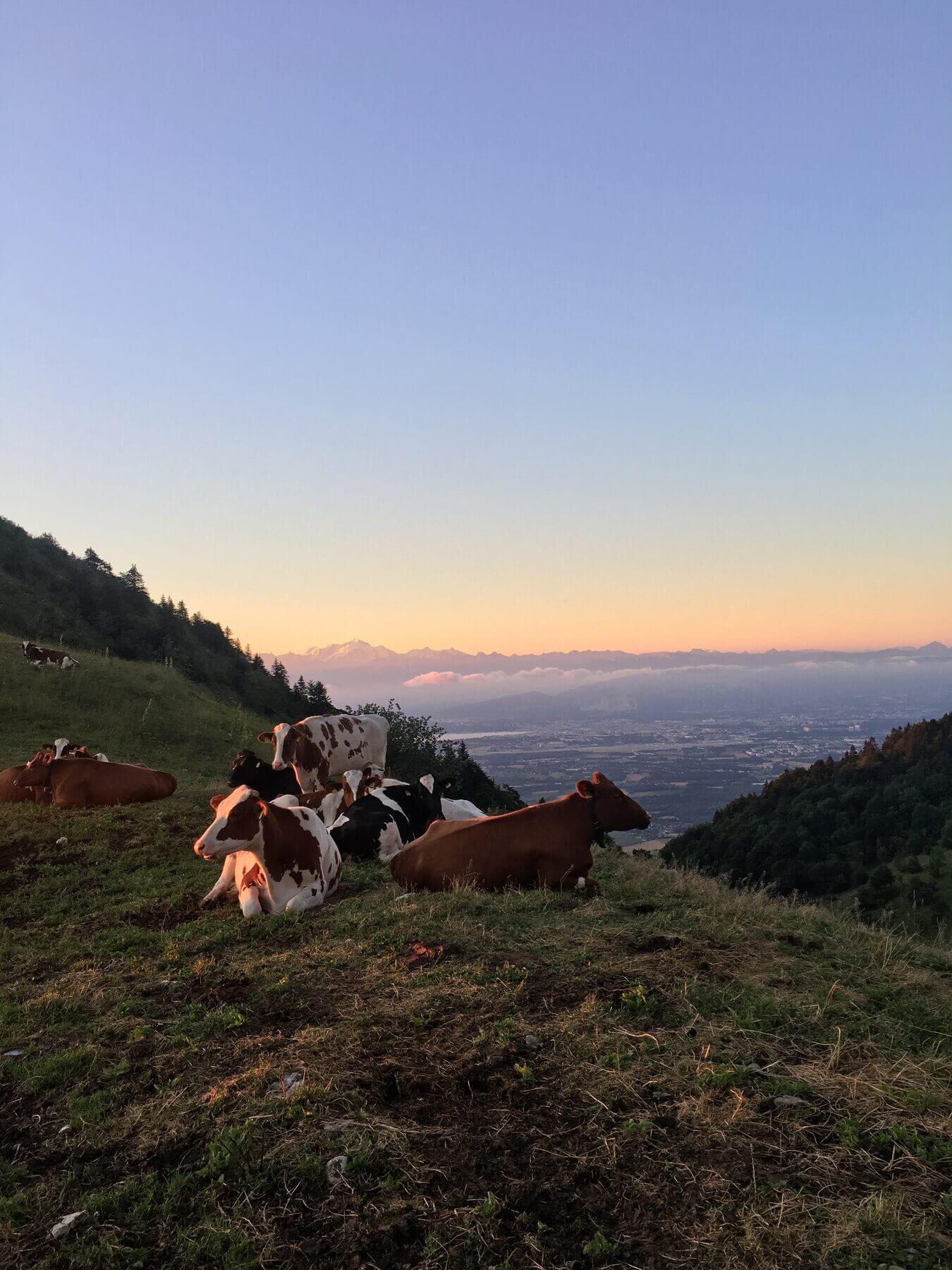
Bivouac or wild camping: they are not the same thing
The distinction is essential. Wild camping, with a prolonged set-up, is forbidden in the Haute Chaîne du Jura national nature reserve. A bivouac is meant as a light and discreet halt, for a single night, from sunset to sunrise, leaving not the slightest trace. It is tolerated subject to conditions, but the regulations can change and vary from sector to sector: your first move should be to check the rules in force before you set off.
The golden rules of responsible bivouacking
A good bivouac is one nobody sees and nobody can guess at the next day.
- One night only, pitched late and packed away early, in the evening and morning light
- No fire: the fire risk on the dry ridges is real, and it is forbidden
- Stay away from the quiet zones and from very busy paths
- Carry out all your waste, without exception, including organic waste
- Relieve yourself well away from water sources and bury it properly
- Stay quiet and discreet, above all at nightfall when the wildlife comes out
The kit for a night up there
Nights on the ridges are cold, even in high summer, and the wind can get up fast. Plan for a sleeping bag that is comfortable below 10 degrees, a light tent or a well pitched tarp, an insulating mat, a head torch, and above all plenty of water: springs are rare up on the tops and sometimes dried up. A stove for hot water is enough, since fire is banned.
Choosing your spot, reading the sky
The right spot is flat, discreet, sheltered from the wind, far from the paths and from sensitive areas. Before you settle in, take a look at the sky: a late afternoon storm turns a beautiful ridge into a very uncomfortable place. Setting off early in the morning, aiming for a viewpoint at sunset, then coming back down at first light is often the best plan.
A bivouac is not something to improvise, especially the first time. Going with a guide means learning the right habits, choosing the right spot and making the most of the night without the stress. That is what I offer with WhyTrek: have a look at our activities.