
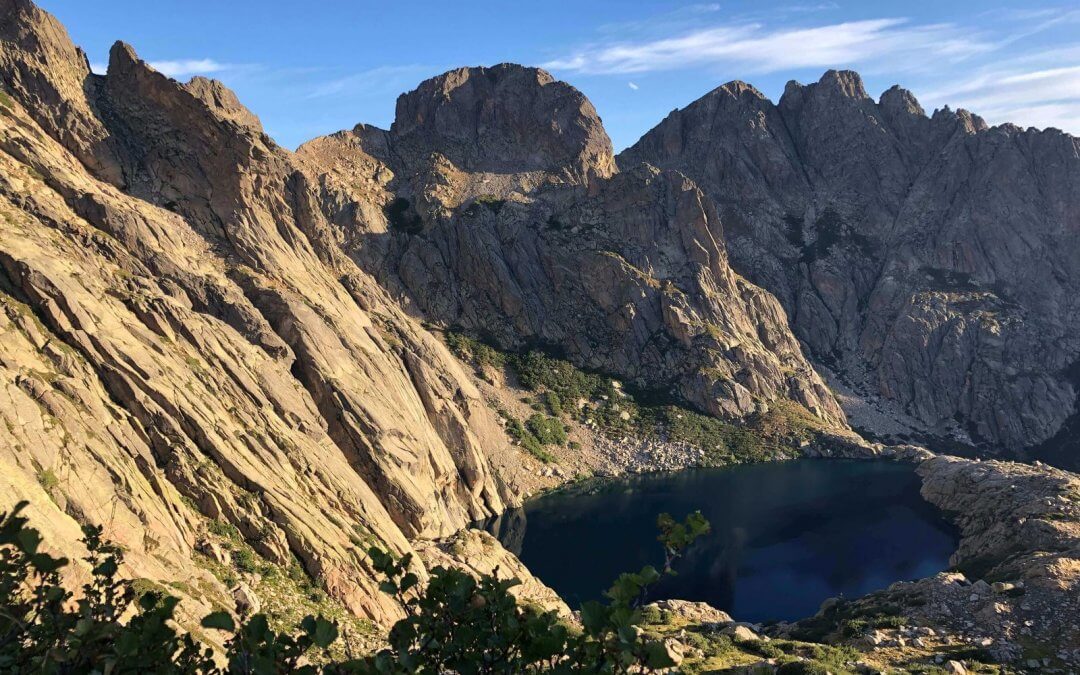
These are the questions that come up most before a GR20: is it dangerous, can you do it alone, is it really the hardest trail in Europe? Having guided a great many walkers on this crossing, here are some honest answers, without dramatising or playing anything down. The GR20 is not a trail to take lightly, but there is nothing inaccessible about it for anyone who prepares and keeps a clear head.
The GR20 alone, is it risky?
Plenty of people hesitate to set off alone, out of fear of the mountains or simply out of dread of the solitude. I understand the apprehension, but I often reassure people on this point: walking the GR20 solo is an incredibly rewarding and liberating experience, one that reconnects you to nature and to yourself as few others do. And in practice, from late June to early September, you will never be alone for long. Thousands of walkers are on the trail at the same moment: you pass one another at the cols, you meet again at the refuge in the evening, and most are keen to share a stretch of path or a conversation. Chosen solitude, yes. Isolation, rarely.
That said, living the GR20 with others has one asset that going solo will never have: support in the moments of doubt. When it gets hard, having someone at your shoulder as your motivation wavers changes everything, especially in the middle of a Corsican storm breaking over you on a ridge. Alone or with others, the watchword stays the same: do not let fear hold you back, but never underestimate the mountain.
Is it really the hardest in Europe?
The GR20 drags along a reputation as the hardest trail in Europe. It is a genuine challenge, but let us be fair: in good conditions it is hardly harder than a Tour du Mont-Blanc, a GR10 in the Pyrenees or any big Alpine trek. What makes it demanding is not one single thing, it is the sum of them: highly changeable weather, the risk of injury on ground that does not forgive inattention, the drop in motivation when your legs go or a companion drops out, the pile-up of short nights between the snorers in the dormitory and the elements shaking the tent, the small everyday ailments, and one scourge nobody mentions often enough: bedbugs, very much present in certain refuges and gîtes.
On the ground, it is the northern stages that impress the most. They are intense and technical, with sections that call for easy-grade climbing moves, harmless when you are paying attention, but capable of catching you out in wet weather, when the slabs turn slippery. On stage four in particular you have to accept a bit of exposure, and that is often where being in a group helps you get past the apprehension. The southern stages are technically gentler, but longer, and the fatigue built up in the north makes itself felt there: this is the moment to keep every bit of your judgement.
Stay careful, even in fine weather
Even under a wide blue sky, the GR20 commands respect. The first rule holds in a single image: dawdling, carelessness and scree make the perfect trio for turning a beautiful landscape into a bad fall. You watch where you put your feet the whole time, even if that means stopping dead to look up and enjoy the view. The second rule concerns storms, which are particularly violent late in the season: in August they often break in the middle of the afternoon, so I advise setting off early and reaching the refuge before 3pm, so as not to end up under hail and lightning on a ridge. Before each departure, get into the habit of asking the refuge warden about the forecast and any fire warnings. Finally, if the altitude leaves you short of breath, do not force it: slow the pace and take more breaks, and your body will adjust.
Why going guided changes everything
One figure puts things back in perspective: every year, out of roughly 20,000 people who set off, only half finish. The withdrawals almost always come from a lack of preparation, from injury or from a lack of time, rarely from a lack of legs. That is exactly where a guide makes the difference: handing over the weather reading, the pacing, the call on whether or not to double up a stage and all the logistics takes off your shoulders the very things that tip most people into giving up. On the sections that intimidate, like the exposure on stage 4, being guided and reassured helps you through without seizing up. And when your body asks for a break, a guide will tell you that a rest day is worth more than an abandonment. Going guided is not depriving yourself of the adventure, it is stacking the odds in your favour so you live it right to the end. To go further, see when to go and how to prepare.