
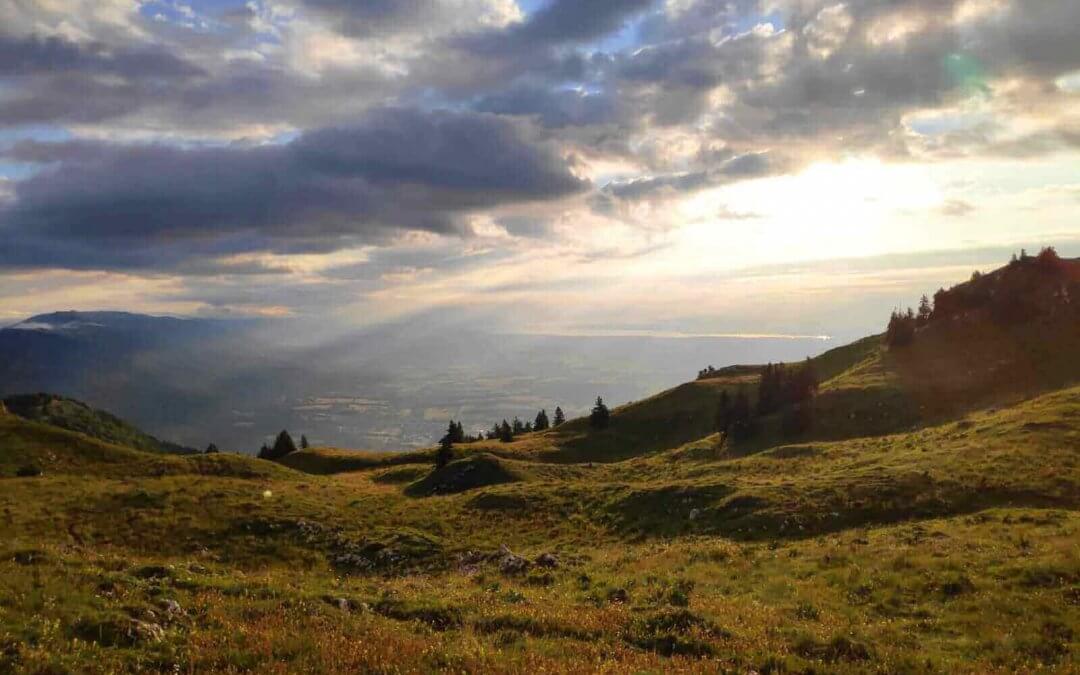
I once crossed the high ridges of the Jura from Divonne-les-Bains to Bellegarde in autumn. The broadleaf trees were turning red, the conifers stayed green, and at the Crêt de la Neige a sea of cloud had covered everything except the Alps. This crossing works very well without a guide, as long as you know where to sleep, where to find water and what the nature reserve forbids. Here is the three-day route I recommend to hikers going self-guided.
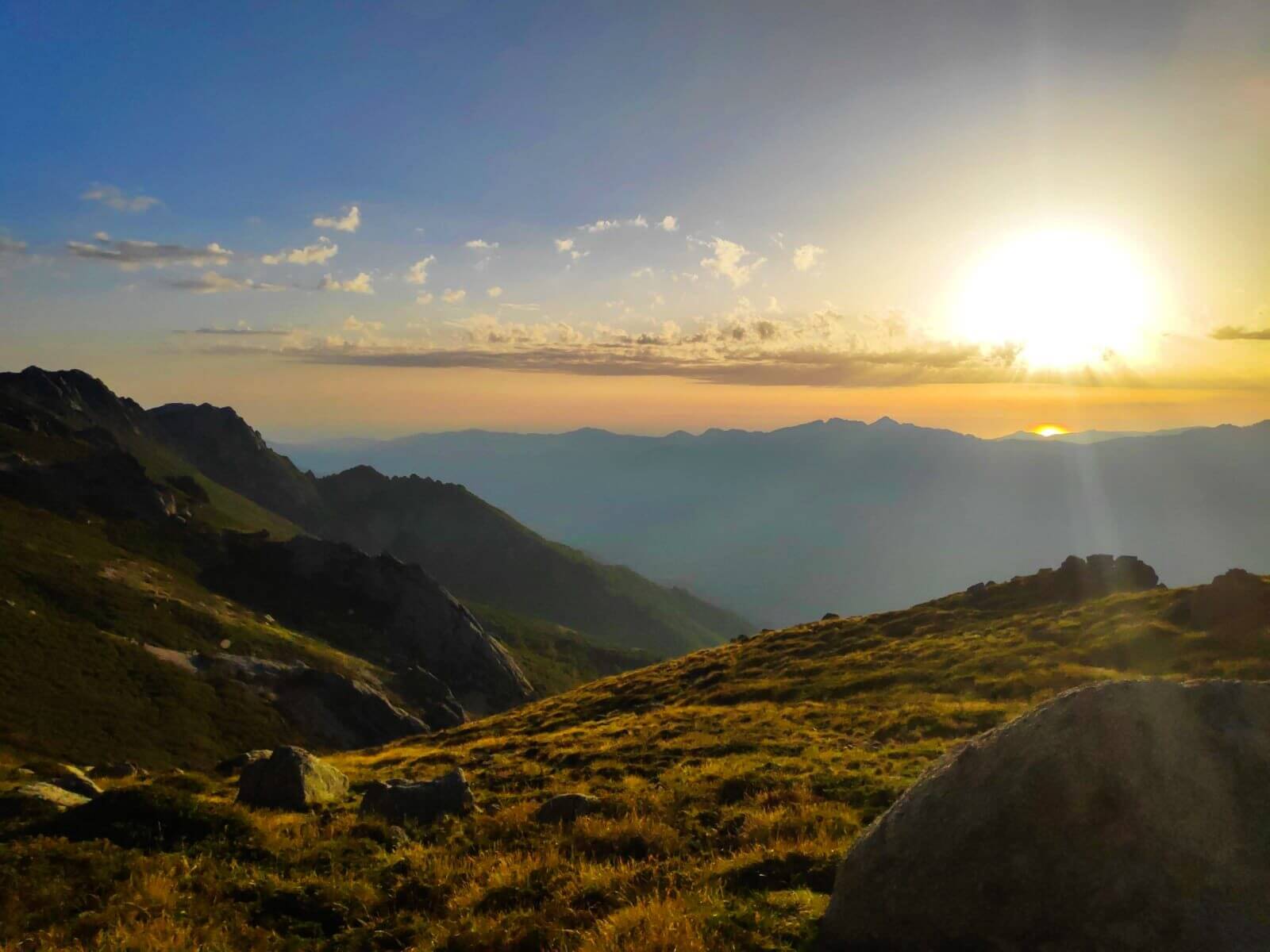
The route in 3 stages, from Mijoux to Chézery-Forens
The Pays de Gex Monts Jura tourist office describes a waymarked three-day route along the Haute Chaîne du Jura, mostly on the GR 9, marked in red and white. Its route sheet gives 38.5 km, 1,777 m of ascent, a high point of 1,720 m and a medium level. It can be walked from 1 April to 30 November, when there is no snow.
- Day 1, Mijoux to the Refuge de la Loge. The GR 9 climbs to the Col de la Faucille, then crosses the Grand Mont Rond, the Colomby de Gex and the Col de Crozet before reaching the La Catheline gondola and the refuge. Allow 900 m of ascent and about 6.5 hours of walking.
- Day 2, Refuge de la Loge to the Chalet du Gralet. Follow the “Sous le Crêt” signs to the Crêt de la Neige, at 1,720 m, then carry on towards the Reculet. It is the finest day: 11.2 km, 435 m of ascent, about 4.5 hours.
- Day 3, Chalet du Gralet to Chézery-Forens. You pass La Poutouille, rejoin the GR 9 for 6 km, drop towards Menthières, then a yellow-marked path leads to Chézery-Forens via Chez le Bon Claude. 12.5 km, 124 m of ascent and 970 m of descent, about 4 hours.
One detail worth knowing: the totals on the route sheet do not exactly match the sum of the three stages. I recommend downloading the tourist office GPX track before you set off and trusting it rather than the round figures. The Crêt de la Neige and the Reculet each have their own article, with day loops: the Crêt de la Neige and the Croix du Reculet.
Sleeping: two refuges, and no tents in the reserve
This is what surprises people most. In the Haute Chaîne du Jura National Nature Reserve, which the route crosses almost entirely, tents, tarps and any other shelter are banned. Sleeping under the stars is still allowed, and fires are forbidden. Elsewhere in the Monts Jura, a bivouac goes up after 7 pm and comes down before 9 am. For a three-day crossing, the simplest option is therefore to sleep in refuges.
- The Refuge de la Loge, in Lélex. It is staffed in summer and winter, at 1,436 m on the GR 9, a 15-minute walk from the La Catheline gondola. It sleeps 19, offers half board and is booked online.
- The Chalet du Gralet, in Péron. It is an unstaffed hut at 1,450 m, with 19 places on mattresses, blankets and a large wood-burning range. The Péron town hall handles bookings, and a €5 contribution goes in the honesty box. Call the town hall before you set off: the chalet has already closed temporarily, in 2025.
In bad weather, the tourist office also lists the Chalet du Sac in Farges, the Chalet de la Poutouille in Péron and the Chalet du Bizot in Collonges. For a night out outside the reserve, I have set out the rules in responsible bivouacking in the Pays de Gex.
Water, the real challenge
The Jura is limestone: water seeps away and springs are rare on the ridges. The route sheet for the Crêt de la Neige loop via Les Brulat states that there is no spring along the way. At the Gralet, a cistern collects water in summer, but the hut listing advises carrying your own supply. I recommend setting off each morning with enough for the whole stage, and taking purification tablets for cistern water. The staffed Refuge de la Loge lets you restock on the first evening.
The reserve rules, in short
- Dogs are banned, even on a lead.
- From 15 December to 30 June, the wildlife quiet zone means staying strictly on the waymarked path.
- Fires and camping in tents are forbidden.
- In a thunderstorm, the tourist office strongly advises against walking along the rock face.
- The Vieille Faucille path remains officially closed because of a rockfall. It can be walked again, but entirely at your own risk.
The details are in dogs and hiking in the Haute Chaîne du Jura and in wildlife and plants of the Haute Chaîne du Jura. When I run on the ridges at dawn, I often come across chamois on the Reculet, warming up in the first rays. Staying on the path also leaves them that moment.
Getting there and back
The route is not a loop. For the return from Chézery-Forens, the tourist office suggests heading to Bellegarde-sur-Valserine and its station, or driving back to Mijoux, but it does not list any bus line. I recommend sorting out the shuttle before you leave: two cars, a friend or a taxi. You carry all your food, since the route is classed as self-sufficient.
Getting ready
Three days in a row on the ridges call for good fitness and a light pack. I recommend setting off early each morning, checking the forecast the evening before each stage and keeping an escape route to the valley, because a thunderstorm on a ridge is hard to manage. My GR20 training advice also applies here, on a smaller scale.
If you would rather not organise anything, I also run a guided trip along the Jura ridges and Lake Geneva, over five days, for private groups.
Sources
- Pays de Gex Monts Jura, itinerant hike from Mijoux to Chézery-Forens via the Haute Chaîne du Jura (stages, figures, rules, alerts, return).
- Pays de Gex Monts Jura, what you need to know about pitching your tent in the Monts Jura (tents banned in the reserve, bivouac hours, refuges).
- Pays de Gex Monts Jura, Refuge de la Loge (altitude, capacity, staffing, booking).
- Refuges.info, Chalet du Gralet (altitude, places, booking, contribution, water, 2025 closure).
- Visorando, the Crêt de la Neige via Les Brulat (no spring along the route).