
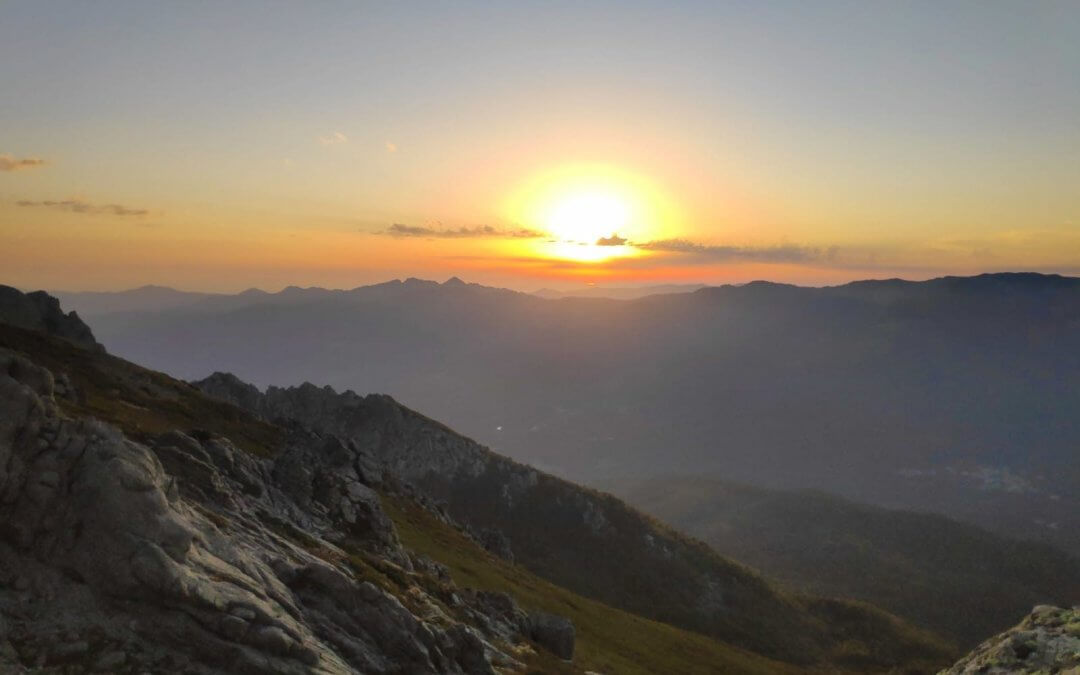
It is the first question I get asked, by a long way: when to go on the GR20 ? I always answer it the same way. The window is short, somewhere between mid-June and mid-September, and the real difficulty is not picking a month. It is dealing with a mountain that changes its mood in the space of a few hours.
The window: mid-June to mid-September
The GR20 refuges are usually staffed from the end of May to the start of October. That is your main marker, because outside that period they stay open but with no upkeep and no service: no meals, no warden, no resupply. Going out of season means signing up for a different adventure, with snowfields in the northern cols, so crampons, rope, ice axe and complete self-sufficiency. For a first crossing, aim for the heart of summer.
June, July and August, or September?
June is often the best month of all. The snow patches on the summits have normally melted, the weather is pleasant, and above all there are far fewer people on the path. You get a mountain that is still quiet, where you meet more marmots than queues of walkers.
July and August concentrate the crowds and the heat. The refuges are full, the dormitories noisy, and you often have to book a long way ahead. It is not a bad period, but it calls for planning and a decent tolerance for crowds and high temperatures.
Late August and early September bring magnificent light and a drop in numbers, but this is also storm season. They can be surprisingly violent. Past mid-September the days shorten and the nights can fall to 0°C: if you are sleeping in a tent, you will want a genuinely warm sleeping bag to avoid shivering through them.
The real issue: the weather
In the Corsican mountains, a storm usually means danger. They tend to break in the middle of the afternoon, and a soaked granite slab turns into an ice rink on the edge of a drop. Hence the rule I repeat to every group. Set off early, in the cool, and aim to reach the refuge before 3pm. It changes everything, for safety and for enjoyment alike.
One example sticks in the memory. In August 2022 the most violent storm in twenty years hit the northern part of the GR. The reserve managers had to close several sections of the path for three days while the damage was repaired. The mountain calls the shots, not the other way round. Before every stage, get into the habit of asking the refuge wardens what conditions are forecast, fire warnings included.
Do not underestimate the altitude
People rarely think about it in Corsica, and yet. The GR20 flirts regularly with 2,000 metres and climbs as high as Monte Cinto, at 2,706 metres. Altitude can affect your breathing and your recovery. If you feel it, the answer is simple: slow the pace, take more breaks, and drink regularly.
My advice
If I had to pick for a first GR20, it would be the second half of June or the first half of September. Long days still, reasonable numbers on the path, and that feeling of having the mountain a little to yourself. Whatever the date, mindset counts as much as the calendar. Set off early, stay humble in front of the sky, and adapt.
Once you have settled on a period, look at how to sleep on the GR20, what budget to plan for and the 16 stages in detail.